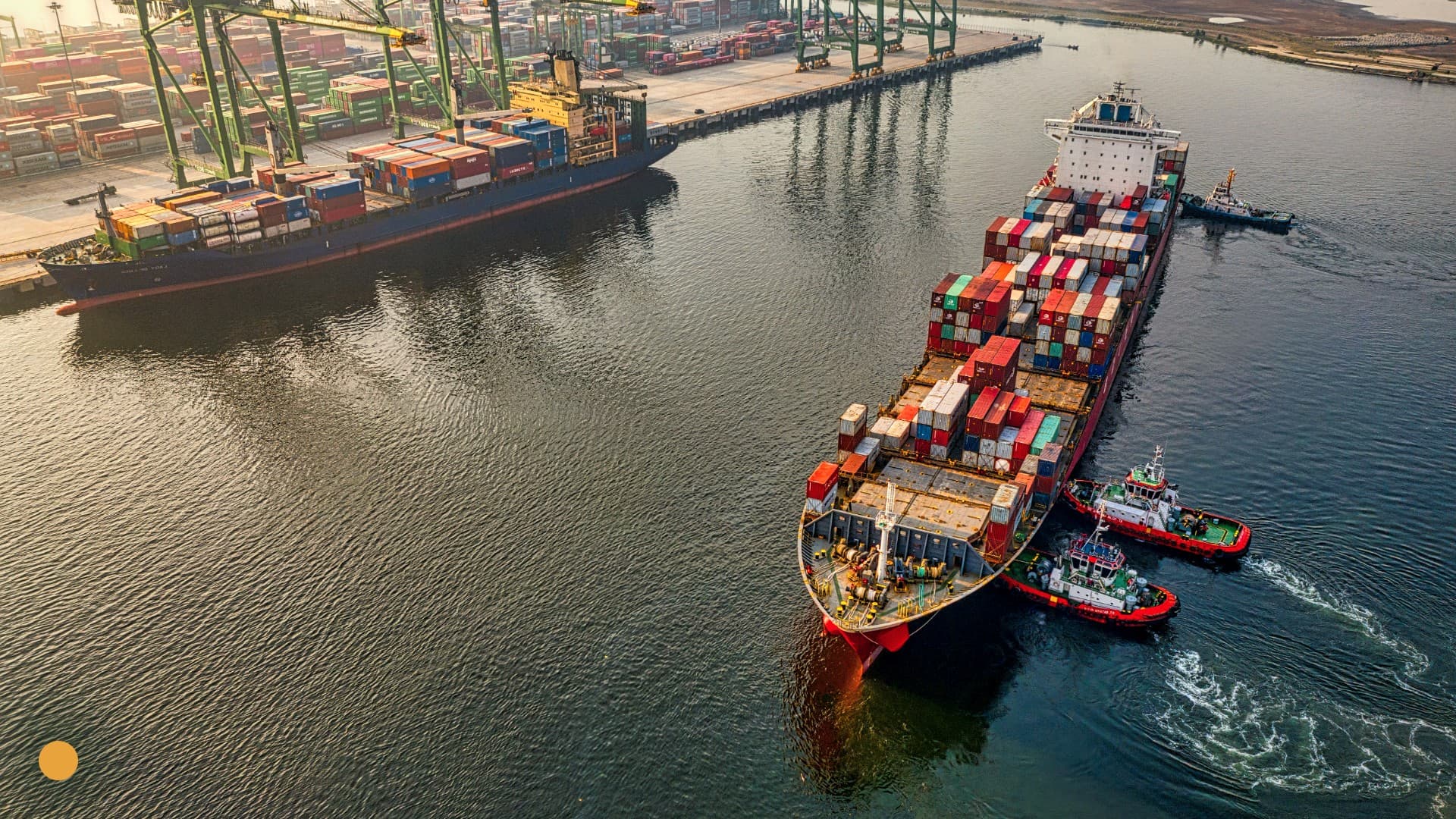
In March, every major shipping line on the Australia and New Zealand trade lanes put an emergency fuel surcharge on top of contracted freight rates. Not one carrier. All of them. The factory price on a tank hasn't moved. The steel hasn't moved. But the number that lands the thing on a wharf in Fremantle has — and if you quote on landed cost, that's now your problem to explain.
So let's actually explain it, because "freight went up" is the kind of vague line that makes a client think you're padding the invoice.
Where the money actually went
The driver is fuel, and the fuel problem is geography. Conflict in the Middle East and disruption around the Strait of Hormuz pushed bunker prices up and forced carriers onto longer, slower routes to stay clear of the risk. Every extra day at sea burns more fuel. The carriers aren't absorbing that — they're passing it through as a surcharge that sits on top of whatever base rate you already agreed.
The numbers are public, so here they are. ANL — the local arm of CMA CGM — added USD $600 on a 40-foot container and USD $300 on a 20-footer from Asia, effective mid-March. MSC restored USD $300 per TEU into Australia and New Zealand from the start of April. Maersk, Hapag-Lloyd, ONE, OOCL, Swire and the rest of the lines serving these routes did the same thing within a fortnight of each other. If you ship in a 40-foot box from a Turkish or Asian factory, that's roughly six hundred US dollars of cost that did not exist on a quote written in February.
The part that matters more than the dollar figure: the surcharge isn't fixed. Carriers have moved from recalculating fuel charges every quarter to every month, because the oil price is jumping around too fast for a quarterly number to keep up. So the surcharge on your March shipment and your June shipment can be different, even on the same lane, same box, same factory. That's the real change. It's not that freight got dearer. It's that landed cost stopped being a number you can lock six months out.
What this does to your quote
Here's the trap, and it's an easy one to fall into. You priced a job in February off a landed cost. The container ships in May. The surcharge that didn't exist when you quoted now does, and it's come out of your margin — not the client's, yours — unless you saw it coming.
Run the maths on a single 40-foot container. Six hundred US dollars of new surcharge is around AUD $900 at the moment. On a full container of tanks that's a small percentage of the cargo value, sure. But it's a real bite out of the margin on that job, and it's the kind of cost that's invisible until the freight invoice lands weeks after you've already given the client a fixed price. Do that across a few jobs in a quarter and you've quietly funded the shipping line's fuel bill out of your own profit.
The fix isn't complicated, it's just discipline. Quote with the current surcharge built in, not last quarter's. Put a short validity on a landed-cost quote — two to three weeks — the same way the freight forwarders now do, so you're not honouring February's number in May. And if you're shipping enough volume to be on contract rates, ask for an explicit cap on the bunker surcharge in writing. Most importers don't, and they wear whatever the carrier decides.
How we handle it, and why we tell you
Two things we do on our side. We ship full containers, not part loads — when a fixed surcharge is spread across a full box instead of a few pallets, the cost per tank is as low as it's going to get. And when a surcharge moves, you hear it from us before the invoice, with the carrier's notice attached, not as a surprise line item after the fact.
That second part is the whole point of writing this. A supplier who passes on a cost increase quietly, buried in a revised total, teaches you to distrust every number they send. A supplier who shows you the carrier advisory, the dollar figure, and the date it took effect is doing the opposite. The cost is the same either way. What changes is whether you can stand in front of your own client and explain it with a straight face.
Freight will settle down. It always does, eventually. Until it does, the importers who come out of this with their margins intact are the ones quoting off today's surcharge and putting a date on their numbers — not the ones still honouring a price they wrote before the war started.